Every professional kitchen that depends on consistent dough portions knows the bottleneck: hand-dividing and rounding raw dough is slow, labor-intensive, and prone to inconsistency. The Divider & Rounder eliminates that bottleneck entirely. Built in Italy and engineered for the demands of busy pizzerias, bakeries, and commercial food operations, this machine takes a bulk piece of raw dough, slices it into precisely equal portions, and immediately rolls each portion into a tight, uniform ball — all in a single automated cycle that takes seconds rather than minutes.
How the Divider & Rounder Works
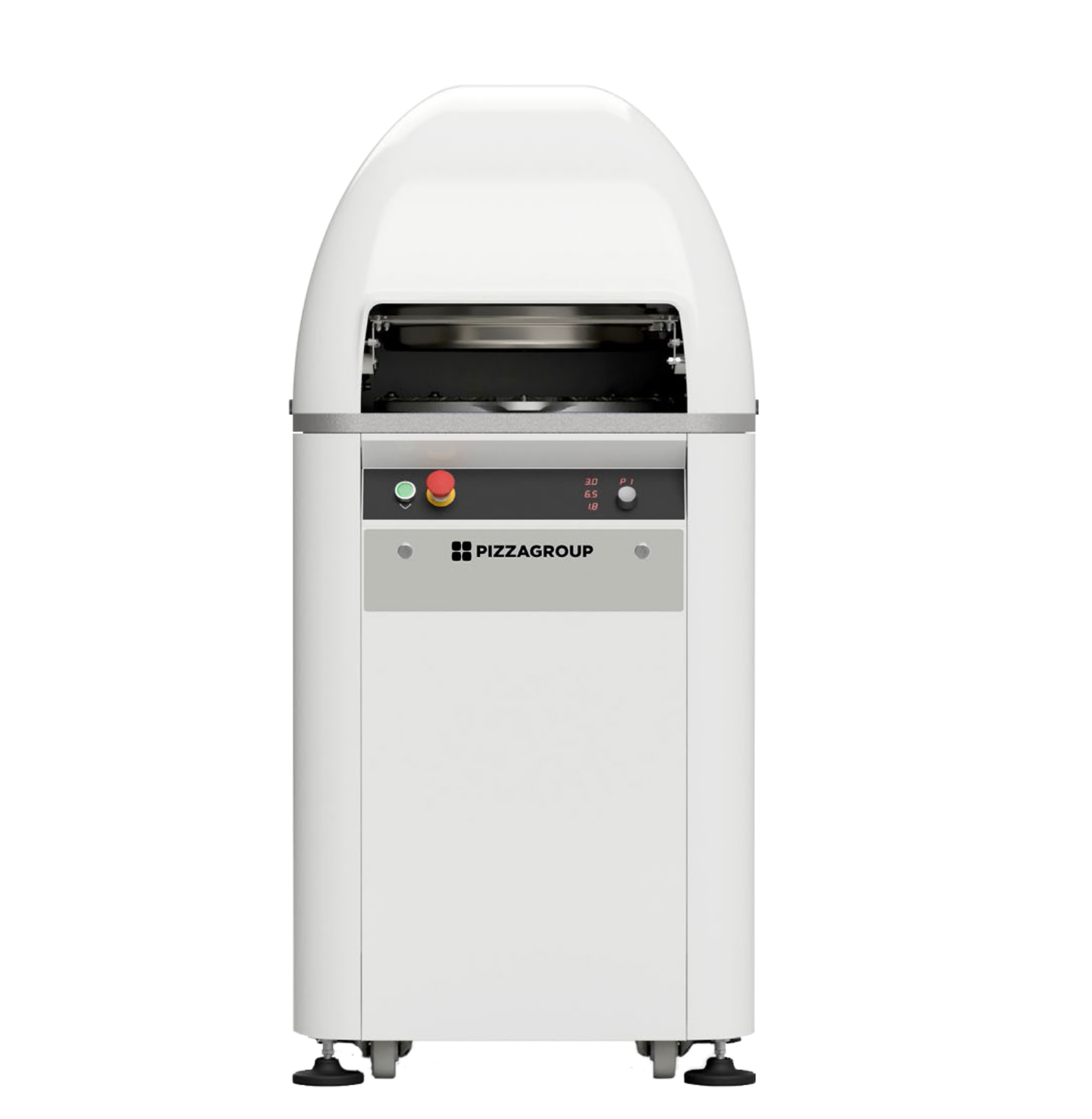
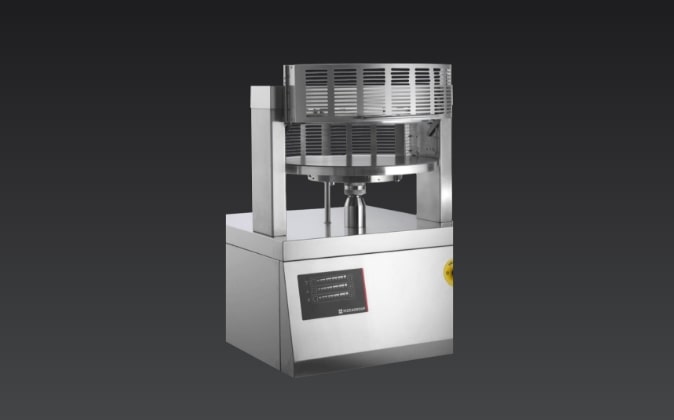
The operating principle is elegantly straightforward. You load a weighed piece of raw dough — up to 5.5 kilograms per cycle — onto the machine’s 15.7-inch (40 cm) diameter head. The pressing mechanism descends and compresses the dough into a flat disc of uniform thickness. A precision-ground cutting grid then divides the compressed dough into either 11 or 15 equal portions, depending on the model. Immediately after cutting, the oscillating rounding plate engages, rotating each divided piece against a lightly floured surface to shape it into a smooth, taut ball with the ideal surface tension for proofing and baking.
The entire divide-and-round cycle happens without you touching the dough between steps. You load raw dough, and within moments you have a full tray of perfectly portioned, expertly rounded dough balls ready for the proofing rack, the retarder, or the prep table. This seamless integration of two traditionally separate tasks is what makes the unit so valuable in a production environment where speed and consistency directly affect your bottom line.
Two Models, Four Configurations
The Divider & Rounder is available in two model sizes. The DR 11 features an 11-division cutting grid, producing dough balls weighing between 180 and 500 grams each at a sustained rate of approximately 1,300 pieces per hour. This model is ideal for operations making larger pizza dough portions, artisan bread rolls, or burger buns where a heavier individual ball weight is needed. The DR 15 uses a 15-division cutting grid, yielding balls in the 150 to 360 gram range at up to 1,800 pieces per hour. The 15-division model is the natural choice for high-volume pizzerias producing standard 200–280 gram pizza dough balls, as well as bakeries making dinner rolls, slider buns, or any product that benefits from a lighter, faster-cycling portion size.
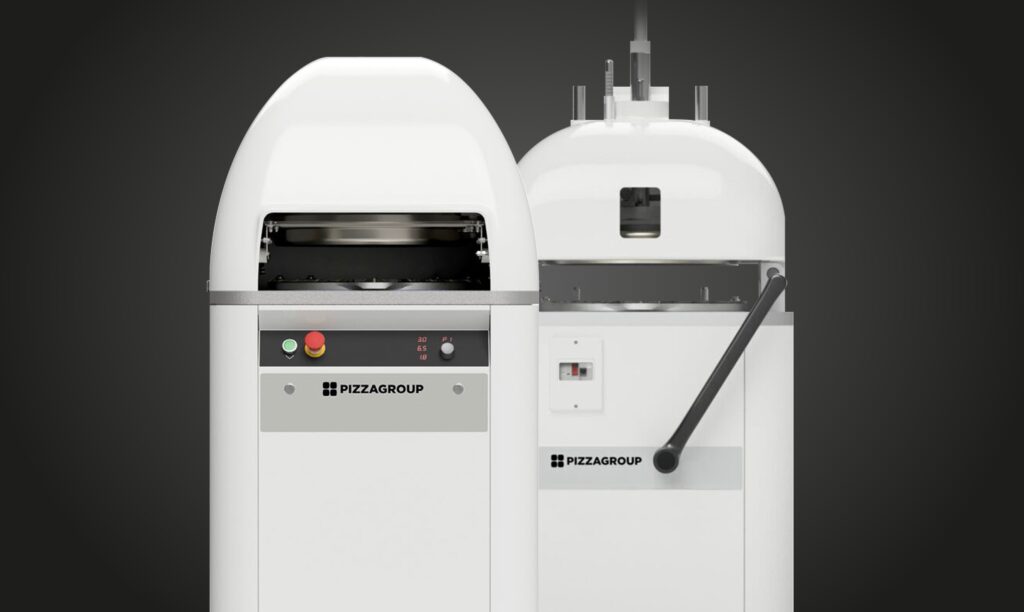
Each model is then available in two operating configurations: Automatic and Manual. The Automatic version uses a hydraulic drive system with two pressing cylinders, one cutting cylinder, and one rounding cylinder, all coordinated by an electronic control unit that can store up to nine programmable recipes. This means you can dial in the precise pressing pressure, cycle timing, and rounding intensity for different dough types — a ciabatta dough, a high-hydration Neapolitan dough, a stiff bagel dough — and recall each program instantly without recalibrating. The Manual version relies on a mechanical lever system with numerical scale markings, giving the operator direct tactile control over pressing force and cycle progression. It is a simpler, more cost-effective option for operations that primarily work with one or two dough formulations and prefer hands-on control.
Built for Observation and Safety
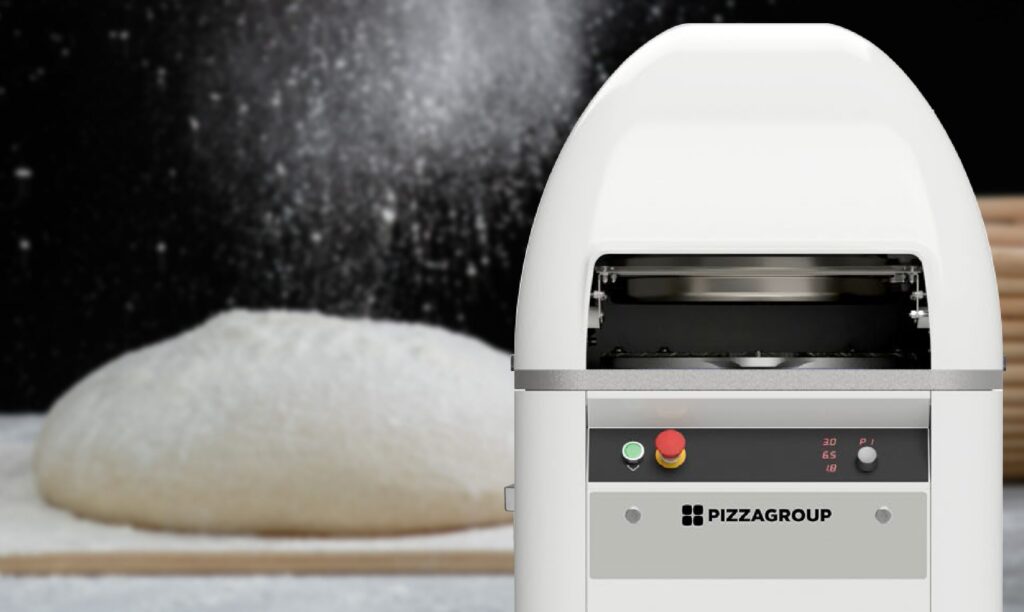
Both the Automatic and Manual versions feature a glass observation door that lets you monitor the dividing and rounding process in real time without opening the machine. This is more than a convenience feature — it is a quality control tool. You can visually verify that the dough is being divided evenly, that the rounding action is producing the desired ball tightness, and that no dough is sticking or deforming during the cycle. If adjustments are needed, you see the issue immediately rather than discovering it only after removing the finished tray.
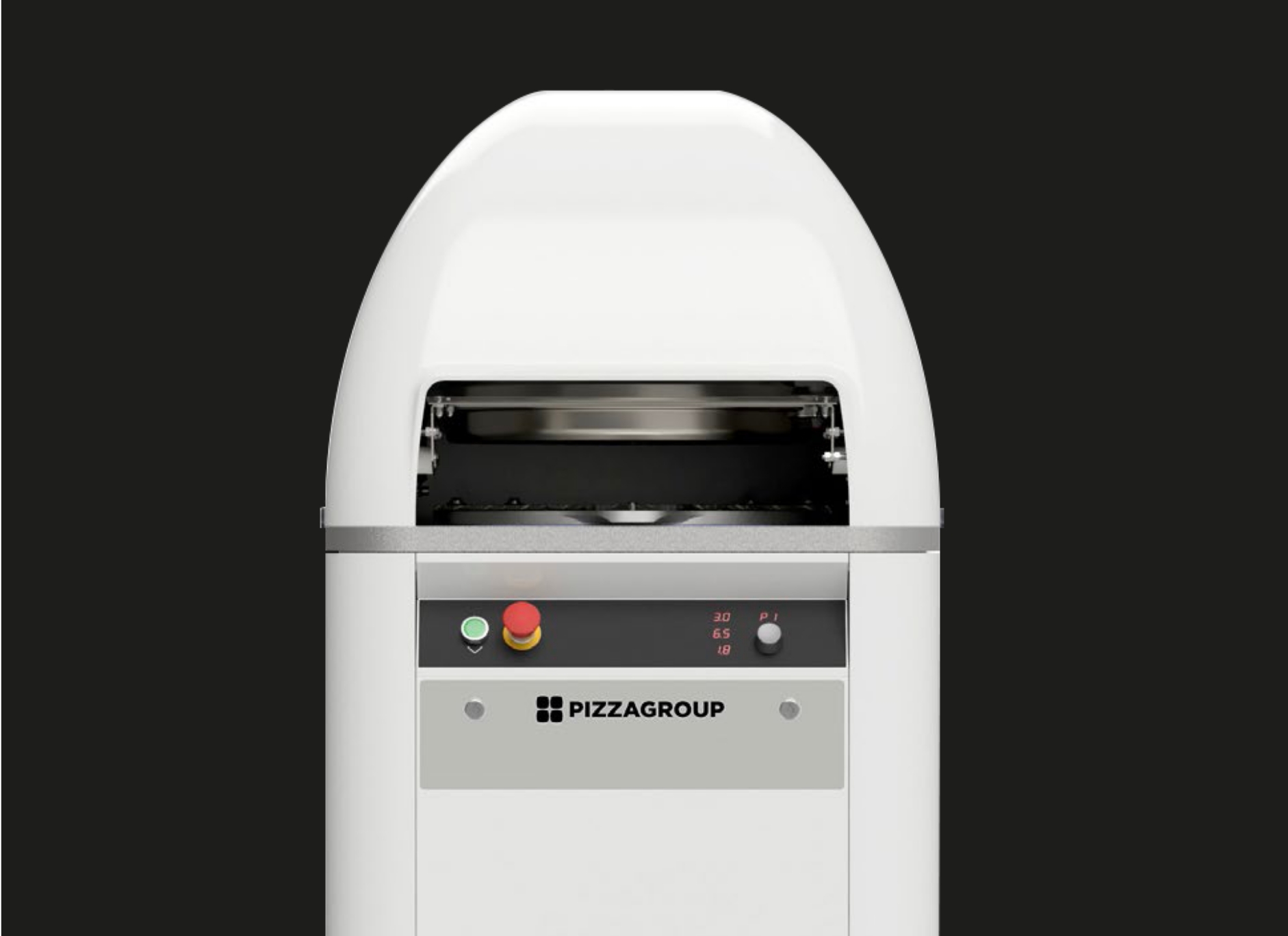
An emergency stop is positioned within easy reach on the control panel, allowing instant shutdown of all mechanical action. The all-in-one control layout places every operational function — start, stop, cycle selection, pressure adjustment — on a single panel face, eliminating the need to reach behind or beneath the machine during operation. These details reflect the understanding that commercial kitchens are fast-paced, high-pressure environments where equipment must be intuitive and safe even when operators are working at speed.
Throughput That Transforms Your Labor Model
Consider the math of manual dough portioning. An experienced baker can hand-scale and round approximately 150 to 200 dough balls per hour while maintaining acceptable consistency. That means a single shift dedicated to portioning 1,500 balls for the next day’s production would consume nearly an entire eight-hour workday for one skilled employee. The DR 15, operating at 1,800 pieces per hour, completes that same task in under 50 minutes. Even the DR 11, at 1,300 pieces per hour, finishes in just over an hour. The labor savings are not incremental — they are transformational. The staff member who previously spent an entire shift on portioning is now free for mixing, topping, packaging, customer service, or any other revenue-generating activity.
Beyond speed, the machine delivers a level of portion consistency that even the most skilled hand-scaler cannot match over thousands of repetitions. Every ball from a given batch weighs the same, has the same diameter, and has the same surface tension. This uniformity cascades through your entire production process: identical proofing times, identical stretch behavior, identical bake times, identical finished product size. For operations selling by the unit — whether that is a pizza, a sandwich roll, or a retail bread product — consistent portioning means consistent food cost, consistent customer experience, and far fewer waste-producing outliers.
Compact Footprint, Serious Capability
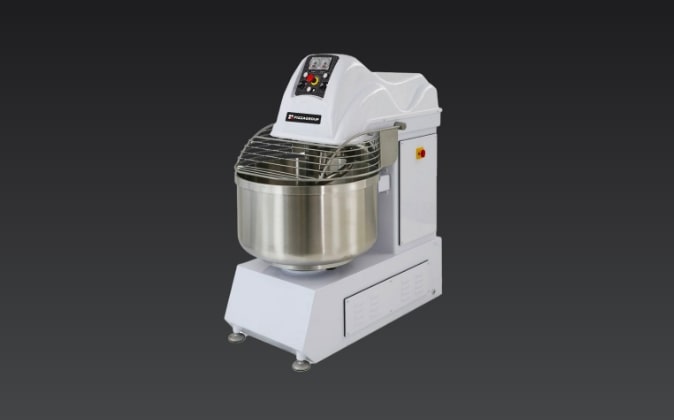
Despite their production capacity, both models maintain a surprisingly compact footprint. The Automatic version measures just 23.6″ wide by 27.5″ deep with a working height of 43.3″ (57″ at maximum extension during the pressing cycle). The Manual version is 26.7″ wide by 24″ deep by 59″ tall. Either configuration fits comfortably alongside a spiral mixer and a proofing cabinet in a standard commercial kitchen layout, creating a streamlined dough production cell where raw ingredients enter at one end and perfectly portioned, rounded dough balls emerge at the other.
Both models operate on standard 208V three-phase 60Hz power, the electrical configuration found in virtually every US commercial kitchen. There is no need for specialized transformers, dedicated circuits beyond what a typical three-phase outlet provides, or any electrical modification to your existing infrastructure.
Who Should Consider the Divider & Rounder
This machine is purpose-built for high-volume pizzerias producing hundreds or thousands of dough balls per day, commercial bakeries making rolls, buns, and small bread products in quantity, central commissary kitchens supplying multiple restaurant locations from a single production facility, hotel and resort food operations that need consistent bread service across multiple outlets, and wholesale dough producers selling portioned dough balls to retail accounts. If your operation currently relies on hand-portioning and you are producing more than 300 dough balls per day, the Divider & Rounder will pay for itself in labor savings alone within months — while simultaneously improving the consistency and quality of every product you make.