What a commercial pizza oven actually does
A commercial pizza oven is, at its core, a thermal reservoir. Its job is to accumulate an enormous quantity of heat in dense material and then release that heat in a controlled, consistent manner across hundreds of bakes in a single service. This is fundamentally different from a residential oven, which heats air inside a thin-walled cavity. A residential unit loses most of its stored energy the moment you open the door. A properly built commercial oven barely notices.
The distinction begins with thermal mass — the sheer weight of refractory stone that absorbs heat during the firing cycle and radiates it back to the cooking surface and dome throughout service. Floor temperature is the specification that matters most to the pizza itself. The underside of the dough makes direct contact with the baking surface, and if that surface cannot maintain 350–400°C after the tenth consecutive pizza, your cook times drift, your crust quality drops, and your line slows down. Everything downstream — ticket times, labor efficiency, customer satisfaction — traces back to whether the floor holds its temperature under load.
This is why the oven is typically the single most important equipment decision in a pizzeria. A mixer can be upgraded. A prep table can be replaced over a weekend. But the oven defines your menu, your throughput, your staffing model, and your energy costs for the next ten to twenty years. It deserves the same deliberation you would give to choosing a location.
Static, rotating, conveyor, and electric — the differences that matter
There are four broad categories of commercial pizza oven, and each serves a different operational philosophy. Understanding which one fits your business is more important than comparing brands within a category.
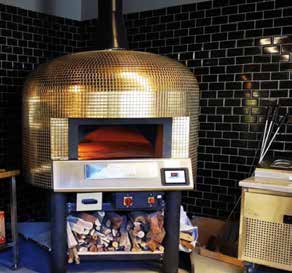
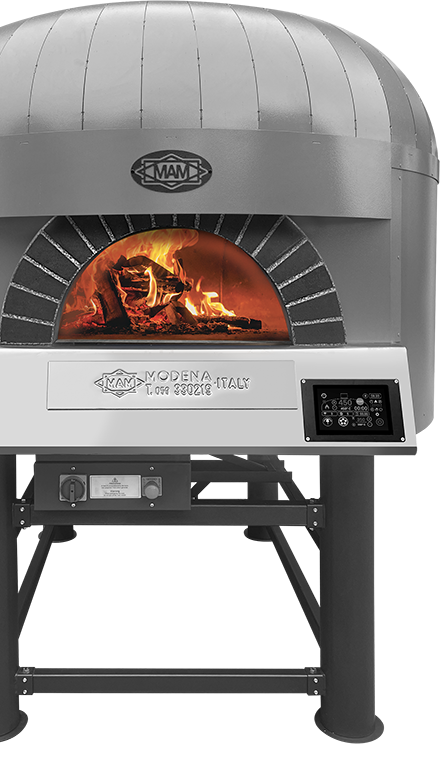
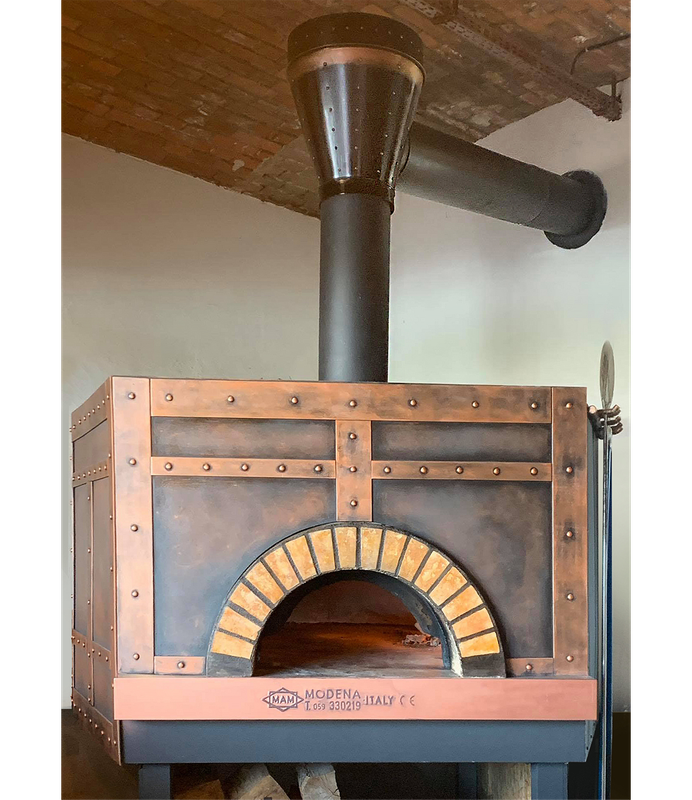
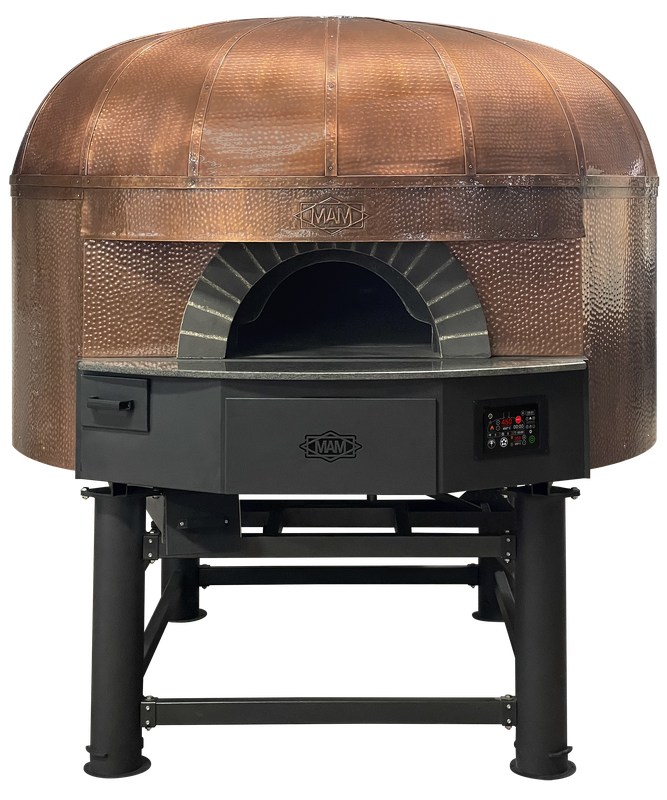
Static traditional ovens are the oldest and most elemental design: a domed refractory chamber with a flat baking floor, heated by wood or gas flame. The operator manages everything manually — placing the pizza, rotating it with a peel at intervals, reading the color of the crust, and pulling it at the right moment. This is the purist approach. It produces extraordinary pizza in skilled hands, carries the lowest equipment cost, and creates the theater that draws customers to an open kitchen. The tradeoff is labor. A static oven demands an experienced pizzaiolo who can manage six to ten pizzas simultaneously, each at a different stage of its bake. During a rush, that skill becomes the bottleneck.
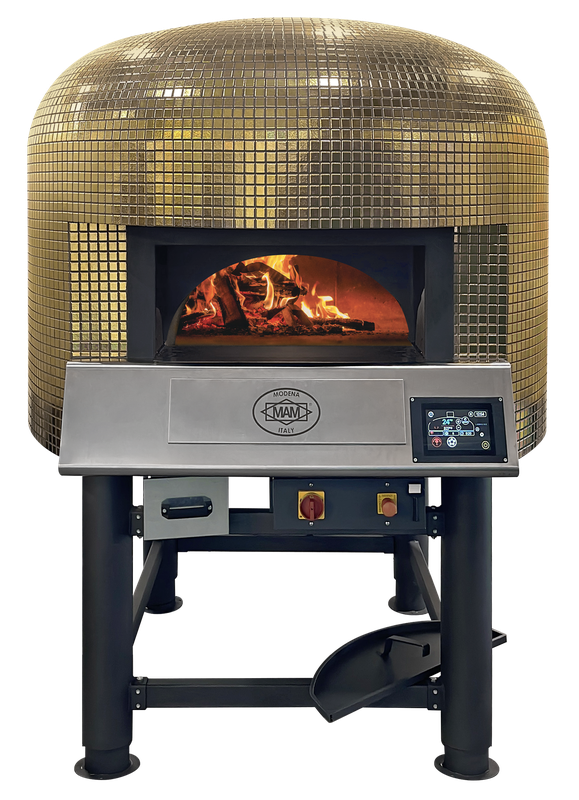
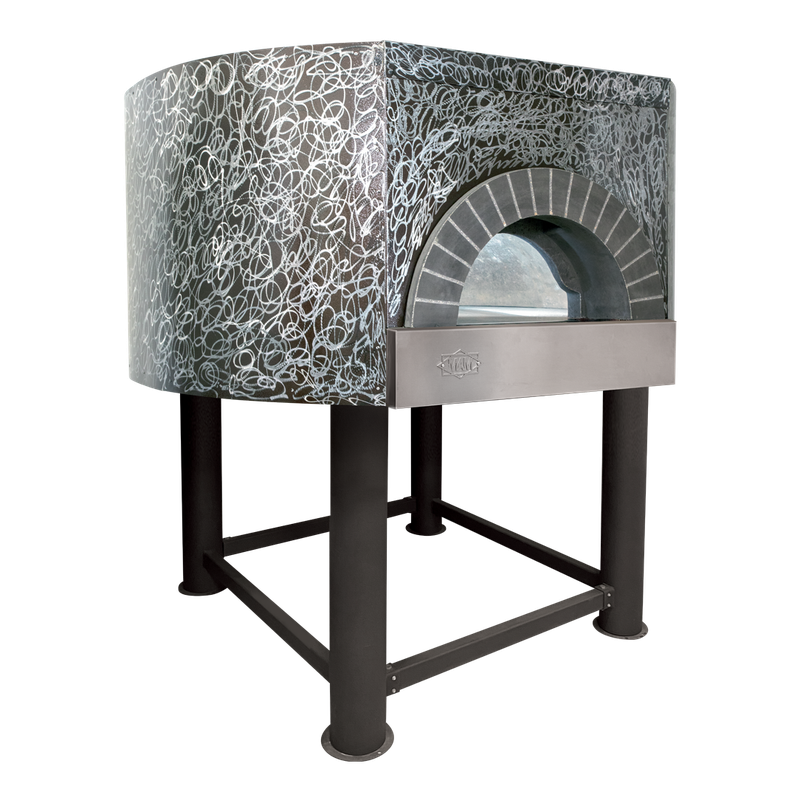
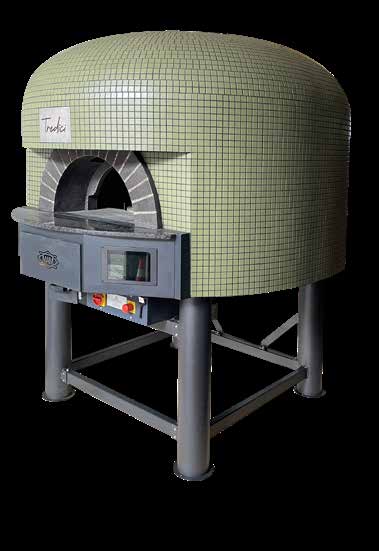
Rotating ovens solve the labor equation. A motorized platform turns continuously inside the same refractory dome, moving each pizza through uniform temperature zones. The operator places a pizza at the mouth, and the platform delivers it back, fully cooked, one rotation later. Manual turning is eliminated entirely. This means more consistent output, fewer burned or undercooked pies, reduced training requirements, and the ability to run high volume with fewer hands on the oven. The cost is higher than static, and the mechanical components — motor, bearings, platform — require periodic maintenance. But for most commercial operations producing more than 80 pizzas per hour, the return on that investment is measured in weeks, not years.
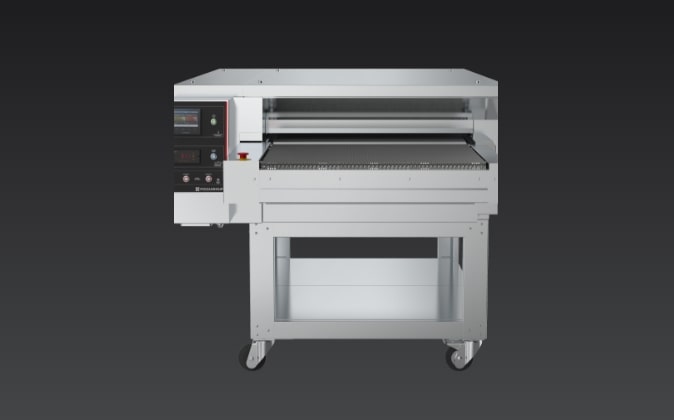
Conveyor ovens take consistency to its logical extreme. Pizzas enter on a moving belt at one end and exit fully cooked at the other. There is no skill required, no variation between pies, and throughput scales linearly with belt speed and oven length. They excel in high-volume, multi-unit, and delivery-focused operations. What they sacrifice is character. A conveyor oven bakes with heated air, not radiant stone. The crust will be uniform, but it will not carry the leopard-spotted char, the slight irregularity, or the wood-smoke complexity that define artisan pizza.
Electric ovens eliminate the most complex installation variables: no chimney, no gas line, no wood storage, no combustion exhaust. Temperature control is precise and independently adjustable between floor and ceiling zones. Installation requires only an electrical connection and, in some cases, a small extraction tube. For operators in buildings where chimney construction is prohibited, where gas permits are difficult to obtain, or where municipal regulations favor all-electric kitchens, an electric oven is not a compromise — it is the only practical path to production. Modern electric designs, like the MAM 490°, achieve 490°C and cook authentic Neapolitan pizza in approximately one minute, closing the performance gap that once separated electric from flame-fired.
Refractory, insulation, and the components that determine longevity
Every commercial pizza oven is built from a handful of core components. The quality and engineering of each one determines whether the oven performs reliably for five years or for twenty.
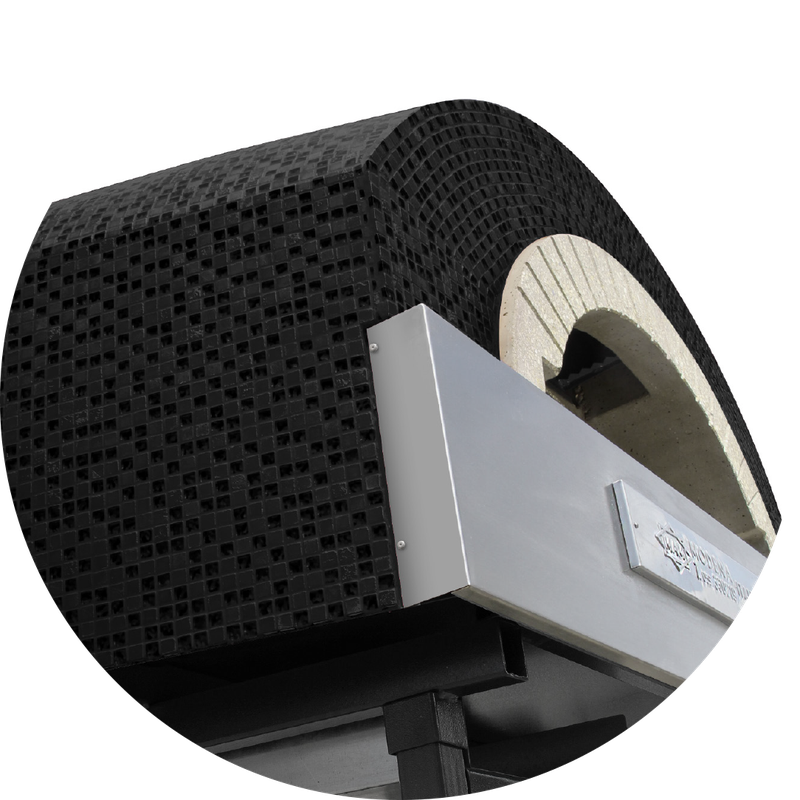
Refractory stone is the heart of the oven. This is the dense, heat-resistant material that forms the baking floor and the interior dome. Not all refractory is equal. MAM uses baked, double-vibrated refractory — a process that compacts the material under vibration to eliminate air pockets, producing a denser, more thermally consistent stone. Their Traditional static ovens use 9 individual wedge-shaped pieces, each 10 cm thick, arranged to form the floor. The wedge geometry is deliberate: as the stone heats to 400°C and expands, the wedge joints accommodate that expansion without cracking. This is why MAM can warrant their refractory for 10 years — the floor is engineered to move with the heat, not fight it.
Insulation layers sit between the refractory interior and the exterior shell. Their purpose is simple but critical: keep the cooking chamber at operating temperature while keeping the outside surface safe to touch. In MAM’s rotating ovens, the baking platform is a three-layer system — two thermal-insulating layers beneath a 12 cm refractory baking top. The fixed lower section adds another two layers of insulating material at 10 cm thick. The result is an oven that maintains 400°C inside while remaining cool on every exterior surface. Poor insulation means wasted fuel, excessive ambient kitchen heat, and potential safety issues during long service hours.
The rotating platform mechanism in rotating models consists of a motor-driven turntable that carries the refractory baking surface. The platform must be perfectly level, thermally stable, and mechanically reliable through thousands of rotations per day. MAM’s 3-layer construction — with a 12 cm baking surface on top — ensures the platform has enough thermal mass to bake consistently, even under continuous loading. Speed is adjustable, and infrared sensors can slow or restart rotation based on oven conditions.
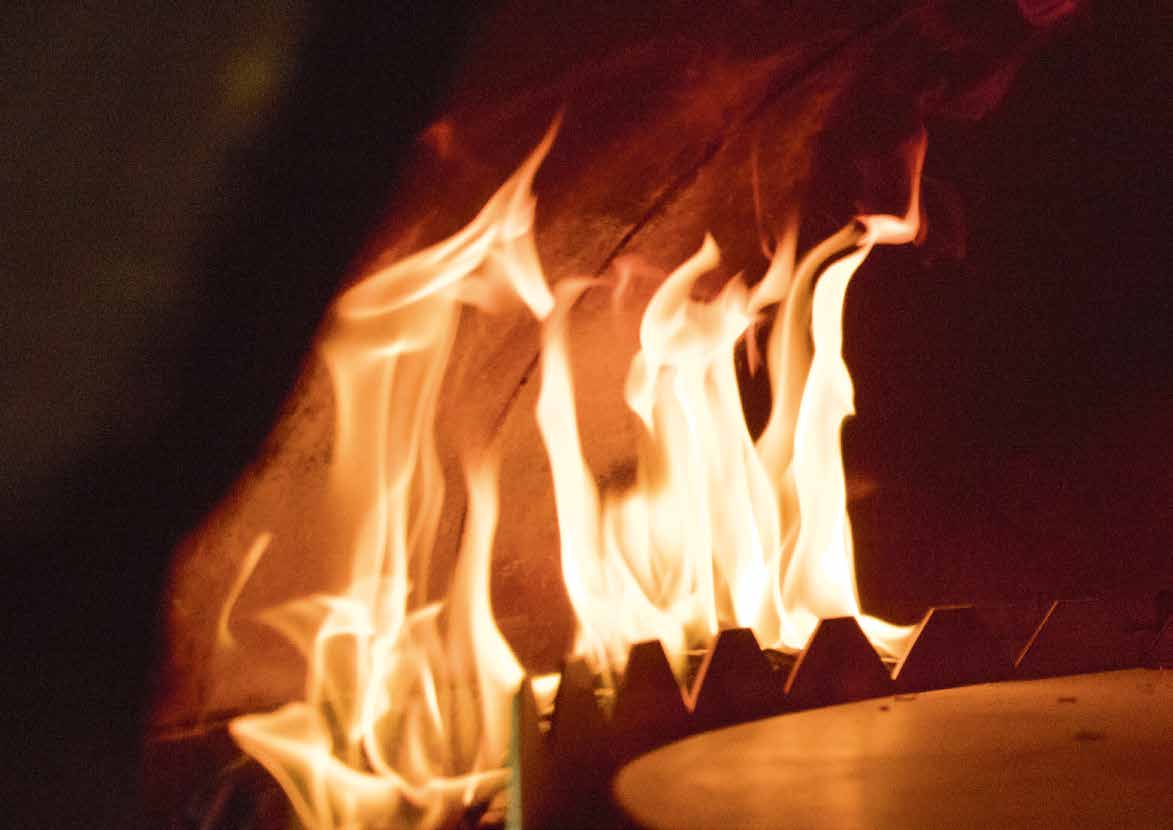
Burner systems vary by fuel type. Gas models use atmospheric burners — MAM’s Modular Fire system provides clean, efficient combustion with optional dual-burner configurations for independent hearth and ceiling temperature control. Wood-fired models rely on direct combustion within the chamber, where the operator manages the fire position and intensity. Combined models integrate both, allowing an operator to switch between wood and gas on demand or use gas for pre-ignition and maintenance heat while wood provides the cooking flame and flavor.
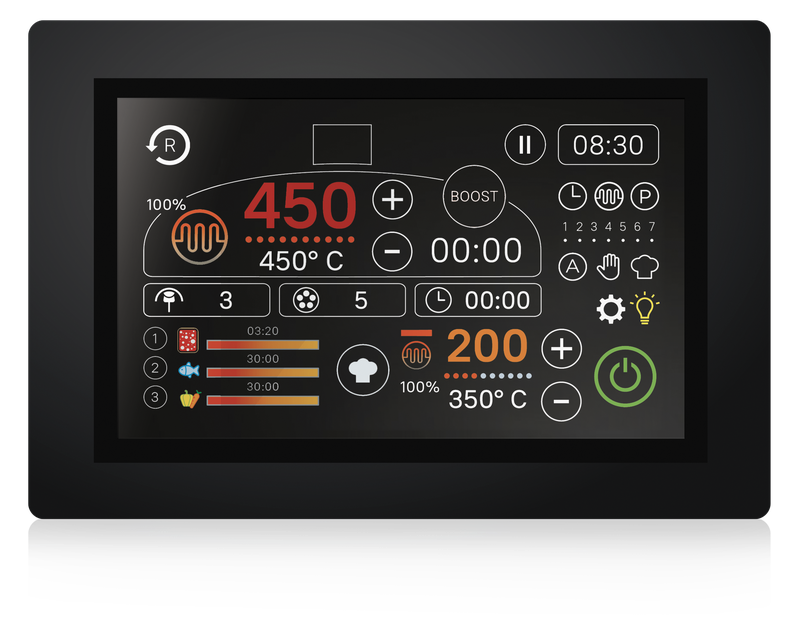
Control panels range from mechanical potentiometers on entry-level models to full touch-screen interfaces with timed cooking, automatic boost functions, and programmable start-up scheduling. MAM’s Smart.mam 4.0 system extends this to remote smartphone management — temperature monitoring, work cycle programming, consumption history, and two-way communication with service technicians. The choice of control system should match the operator’s technical comfort and the complexity of their menu.
The mouth and door are often overlooked, but they govern the balance between heat retention and workflow speed. A wider mouth — like MAM’s 82 cm Genova configuration — allows oversized pizzas and faster loading but increases heat loss during service. The standard 54 cm mouth offers the best consumption-to-performance ratio. The 68 cm Design mouth splits the difference. Choosing the right mouth width is a question of what you are baking and how fast you need to move it.
Heat retention — the specification most operators undervalue
When operators compare ovens, they tend to focus on peak temperature. Can it reach 400°C? Can it reach 490°C? These numbers matter, but they are not the numbers that determine your experience during a Friday night dinner rush. The specification that matters most is heat retention — the oven’s ability to maintain its operating temperature under continuous load, hour after hour, without demanding constant fuel input.
Heat retention is a direct function of thermal mass. Thick, dense refractory stone absorbs an enormous amount of energy during the firing cycle and releases it slowly and steadily during service. An oven built with 10 cm of double-vibrated refractory — as in MAM’s Traditional static models — or 12 cm on the rotating baking surface, stores enough thermal energy to maintain floor temperature through a four-hour dinner rush with minimal fuel addition. It also retains enough heat overnight that the next morning’s startup takes only 15 to 20 minutes, not the 45 to 90 minutes required by ovens that have fully cooled.
Compare this to ovens built with ceramic fiber or thin-wall refractory. These units heat up quickly — which sounds appealing — but they lose heat just as quickly. Every time the door opens, every time a room-temperature dough ball hits the floor, the surface temperature drops and the burner must compensate. During sustained service, the burner runs almost continuously, fuel costs climb, and the baking surface temperature fluctuates in ways the operator can feel in the crust. Pizzas that took 90 seconds at the start of service begin taking two minutes, then two and a half. The line backs up. Quality drifts.
A well-insulated, thick-refractory oven behaves differently. It absorbs the thermal shock of each new pizza without measurable surface temperature loss. It coasts through brief pauses in production without the burner cycling on. And it carries enough residual heat at the end of a long night that the next day begins with a warm oven rather than a cold one. Over the lifetime of the equipment, that difference translates into lower fuel costs, faster morning prep, more consistent product, and less stress on the operator managing the line.
Choosing the right oven for your operation
The correct oven is the one that matches your production volume, your staffing model, your physical space, and your long-term plan. There is no universally best option — only the option that fits.
Production volume is the starting point. A 50-seat neighborhood pizzeria running one dinner service needs a very different oven than a 200-seat venue doing lunch, dinner, and weekend brunch. As a rough guide, match your peak hourly pizza count to oven capacity: a rotating platform in the 115–125 cm range handles 7 to 9 pizzas simultaneously, which translates to roughly 80–120 pizzas per hour depending on bake time. A 135–145 cm platform handles 10 to 15 pizzas at once. Static ovens require more skilled labor to achieve similar throughput, but they cost less and carry no mechanical complexity.
Fuel type is partly a practical decision and partly an identity decision. Wood creates the flavor profile, the aroma, and the visual theater that many customers associate with authentic pizza. Gas delivers clean, consistent heat with no ash, no soot, and no wood storage requirements. Combined fuel gives you both — use gas for convenience during weekday lunch, switch to wood for the Friday night experience. Electric removes the chimney and gas line from the equation entirely, which can save tens of thousands of dollars in installation costs for buildings that lack existing infrastructure.
Static versus rotating is fundamentally a staffing question. If you have an experienced pizzaiolo who takes pride in managing the oven manually, a static Traditional is the right tool. If you want consistent results regardless of who is working the shift, or if you need to reduce labor costs, a rotating platform pays for itself quickly. Many operators who start with a static oven move to rotating when they expand or when their original oven operator moves on.
Footprint and installation deserve honest assessment before you fall in love with a model. Measure your space. Confirm that your building can support a chimney if you are choosing wood or gas. Verify your electrical capacity if going electric. Check floor load ratings — a fully assembled rotating oven with refractory is a substantial piece of equipment. Ventilation, hood requirements, and local fire codes all factor in. Address these questions before selecting a model, not after.
Finally, consider the long-term cost. An oven built with thick refractory and quality mechanical components will serve you for 15 to 20 years with routine maintenance. An oven built to a lower price point with thinner materials and lighter construction may need replacement in 7 to 10 years. When you amortize the purchase price over the true service life, the more substantial oven almost always costs less per year — and it holds its performance the entire time.